
HEALTH & NUEROSCIENCE
WHAT IMPROVES AFTER QUITTING DRINKING ALCOHOL – SOOOOO MUCH!
Herein lies the most hidden and astonishing news! Yes! There is so much to look forward to when your body, mind and spirit are free from the disabling effects of Alcohol!
I guarantee and promise that you will feel better… It’s not just a marketing ploy. You get these benefits just by the sheer removal of one liquid substance!
IMMEDIATE IMPROVEMENTS IN OUR WELL-BEING
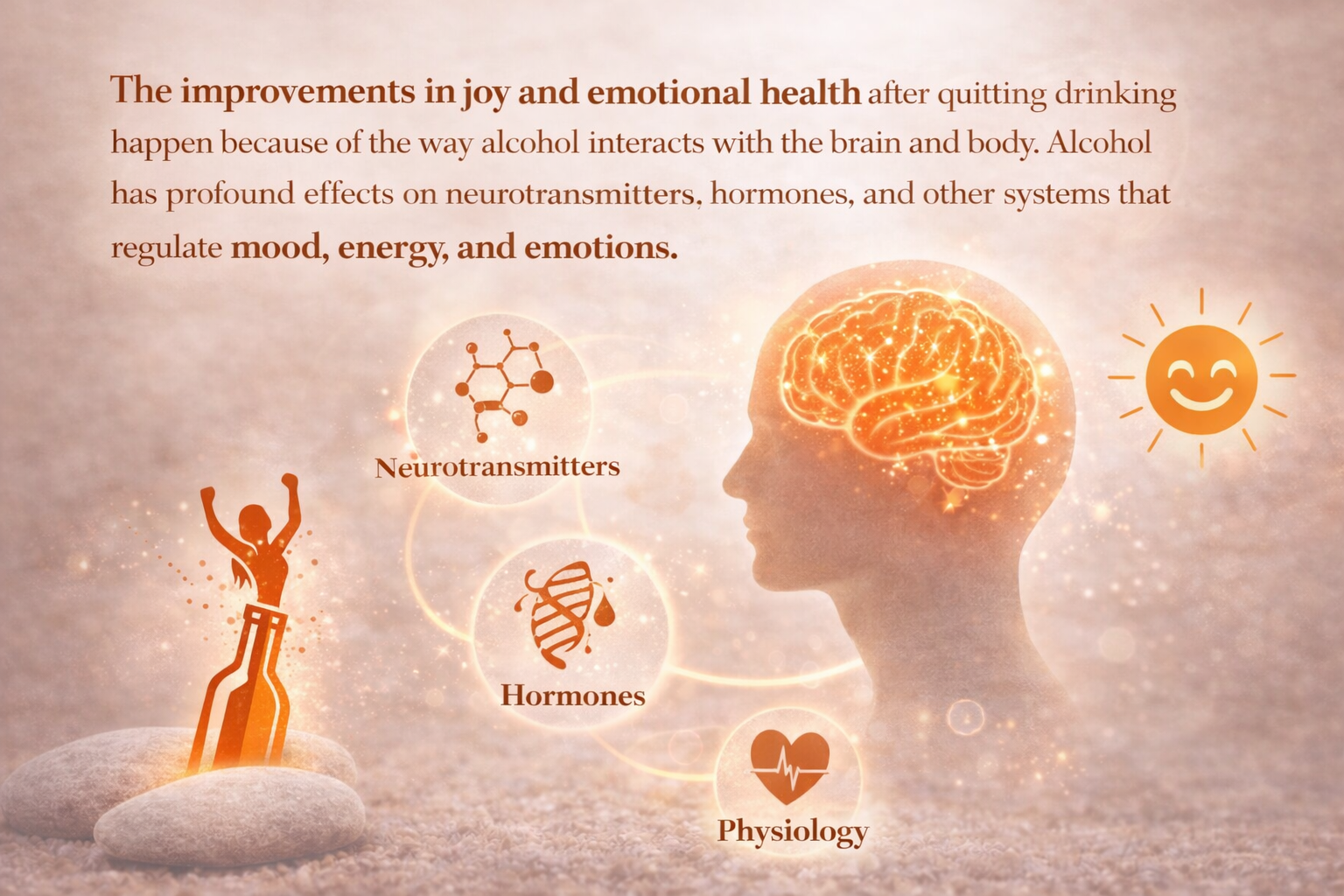
The improvements in joy and emotional health after quitting drinking happen because of the way alcohol interacts with the brain and body. Alcohol has profound effects on neurotransmitters, hormones, and other systems that regulate mood, energy, and emotions.
In essence, when you stop drinking alcohol, your body and brain begin to return to their natural states – without the depressant effects of alcohol, the systems that regulate your mood, stress, sleep, and energy can function more efficiently. This rebalancing opens the door to a more stable, authentic, and enduring sense of joy.
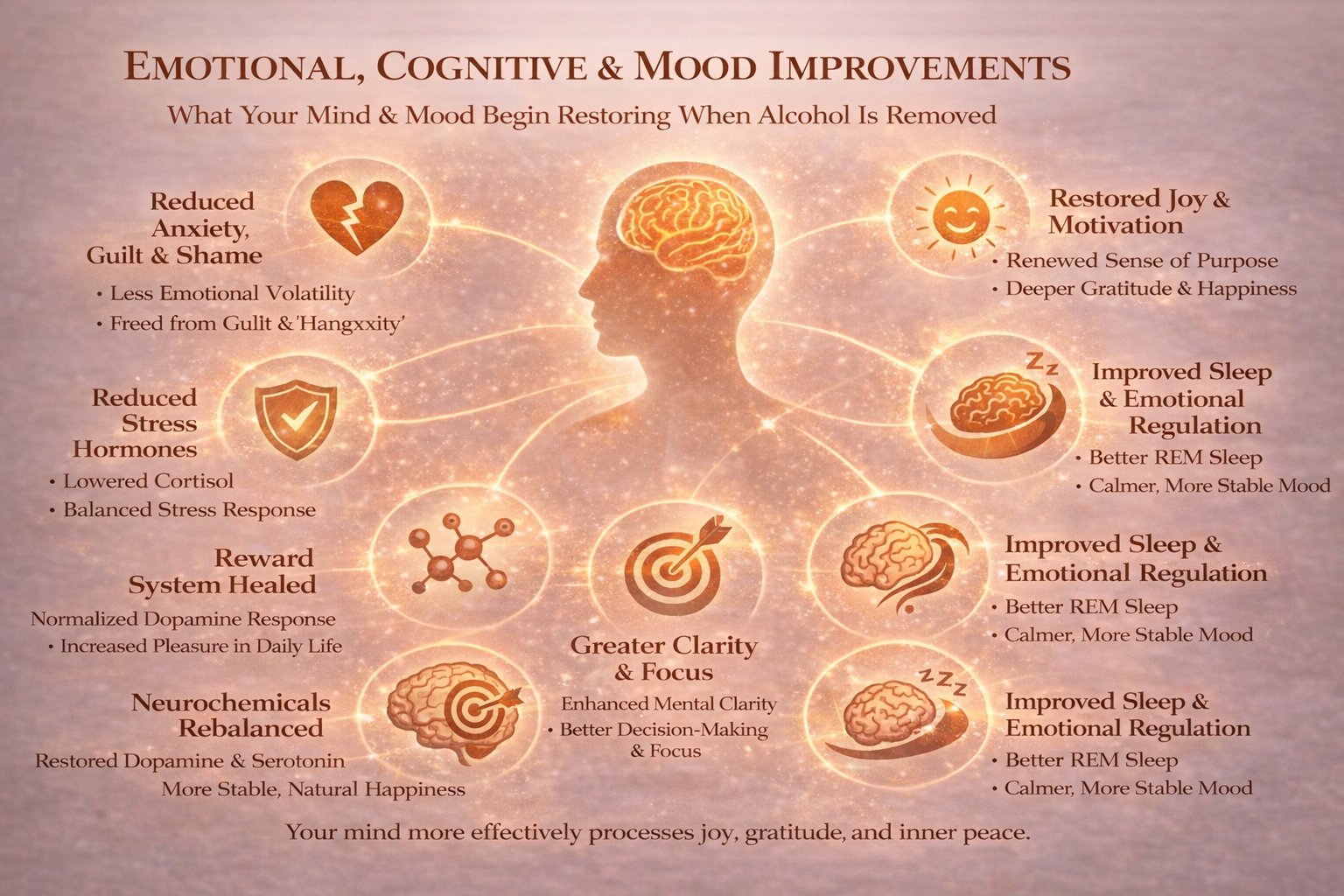
EMOTIONAL, COGNITIVE & MOOD IMPROVEMENTS
Reduction of Anxiety, Shame, Guilt – All the Low Vibe Emotions
Alcohol-Induced Anxiety: Many people drink to relieve anxiety, but alcohol actually exacerbates it over time. The temporary relaxation alcohol provides is followed by a rebound increase in anxiety (sometimes called “hangxiety”). This creates a cycle of drinking to relieve anxiety, which only worsens the condition.
Emotional Relief from Guilt: Alcohol can also lead to guilt or shame, especially after overindulging or making poor decisions while intoxicated. Quitting alcohol eliminates this cycle of guilt and anxiety, creating more emotional space for positive feelings like joy and contentment.
Reduced Stress Hormones
Cortisol and Stress Response – Alcohol increases the production of cortisol, the body's primary stress hormone. While alcohol might temporarily reduce stress, it triggers a cycle of increased cortisol production that actually heightens stress levels in the long run.
Normalizing Hormones: When you stop drinking, cortisol levels begin to stabilize, which helps lower your baseline stress level. Lower stress allows you to experience more positive emotions, including joy.
Restoration of the Brain's Reward System
Dopamine Desensitization: Frequent alcohol use desensitizes your brain's reward system, making it harder to enjoy activities (without alcohol being involved). Hobbies, relationships, goals and achievements… they all seem to lose their appeal or it’s more “work” to enjoy life!
Quitting alcohol allows the brain's reward system to gradually reset and restore balance. Alcohol disrupts this system by overstimulating dopamine production, leading to a cycle of cravings and dependence. Once drinking stops, the brain starts to heal, reducing tolerance and allowing natural rewards like food, exercise, and social interactions to feel more fulfilling. This process can take weeks to months, but over time, cognitive functions improve, mood stabilizes, and the brain returns to a healthier, more balanced state.
Improved Sleep and Emotional Regulation
REM Sleep Disruption: Alcohol interferes with and disrupts REM sleep, the most restorative stage of sleep. REM is critical and essential for emotional regulation and processing. Poor-quality sleep leads to irritability, anxiety, and difficulty managing emotions.
Better Sleep Quality: When you stop drinking, your sleep quality improves, which directly impacts emotional regulation and mood. With better sleep, your brain can process emotions more effectively, reducing negative feelings and increasing the capacity for joy.
Neurochemical Rebalancing
Alcohol directly alters neurotransmitters like dopamine, serotonin, and GABA – which are responsible for regulating mood, pleasure, and relaxation.
Rebound Effect and Dysphoria: After the initial spike in dopamine, your brain responds by reducing its natural production of dopamine and other neurotransmitters, leaving you feeling down or anxious when you're not drinking. Over time, your brain becomes dependent on alcohol to produce these chemicals, disrupting your ability to experience joy naturally.
After Quitting
Restoring Balance: When you quit drinking, your brain slowly starts to restore its natural balance. Over days, weeks and months, your body relearns how to regulate these neurotransmitters on its own, allowing for more stable and authentic feelings of joy!
Homeostasis: Your brain starts to naturally rebalance these chemicals. Over time, you experience fewer mood swings and can feel real, sustainable joy without the artificial high that alcohol provides. You regain your ability to enjoy everyday pleasures with more emotional consistency.
Reversing Alcohol’s Toxic Effects on the Brain
Brain Inflammation: Alcohol is toxic to brain cells and can cause inflammation in the brain, leading to cognitive issues, depression, and emotional blunting.
Neuroplasticity and Healing: Once you stop drinking, your brain can begin to heal from this damage. Neuroplasticity, the brain's ability to adapt and form new connections, helps restore emotional balance, improving mental clarity and joy.
When a person stops drinking alcohol, the brain begins a process of repair and recovery. The extent of recovery depends on the severity of alcohol use, the length of time spent drinking, and individual factors like age and overall health. And I promise… you WILL experience a heightened and ever-increasing baseline from which you operate cognitively and confidently!
Timeline of Brain Recovery
Day 1 – 2 Weeks: During this time, detoxification occurs, and symptoms of withdrawal (such as anxiety, irritability, and cognitive fog) are common. These are the brain’s early attempts to rebalance neurotransmitters and repair damage.
**See Medicinal Herbs document for replacement and relief of those withdrawal symptoms!
1 – 6 Months: During this period, neurogenesis in the hippocampus resumes, and cognitive functions such as memory and attention begin to improve. Brain volume can start increasing, especially in the hippocampus and frontal lobes.
6 Months to Infinity: After 1 year of alcohol free, many of the brain's functionality has returned to a full and healthy state. Decision-making, impulse control, and emotional regulation have significantly improved. Neuroplasticity is at a much higher level, and cognitive and behavioral recovery continues!
Restoring Nutrient Balance
Nutrient Deficiency: Alcohol interferes with the absorption of important vitamins and minerals, particularly B vitamins like thiamine (B1), which are essential for mood regulation and brain function.
Nutrient Replenishment: After quitting alcohol, your body can absorb nutrients more effectively, helping to restore the biochemical balance necessary for good mental health and emotional stability. Proper nutrition improves brain function, supporting feelings of happiness and well-being.
Improved Brain-Body Communication
Alcohol Disrupts the Gut-Brain Axis: The gut produces neurotransmitters and plays a critical role in mood regulation. Alcohol can damage the gut lining and disrupt the balance of gut bacteria, which affects mood and emotions.
Healing the Gut: After quitting alcohol, the gut begins to heal, which in turn improves communication between the gut and the brain. This enhances mood regulation, reduces feelings of depression or anxiety, and increases overall emotional well-being.
Better Social and Coping Skills
Alcohol as a Crutch: When people use alcohol to cope with stress or socialize, it often masks underlying emotional issues. Over time, alcohol prevents the development of healthy coping strategies.
Building Resilience: When you quit drinking, you are forced to develop better, more effective ways to manage stress, anxiety, and social situations. As you build these skills, you experience more confidence and resilience, which contribute to a greater sense of joy.
Mind-Body-Spirit Connection
Alcohol Numbs the Senses: Drinking alcohol can dull your perception of the world, both physically and emotionally. You may feel disconnected from your body and emotions.
Heightened Awareness and Presence: Without alcohol, many people report feeling more in tune with their emotions, senses, and surroundings. This heightened awareness allows you to experience more joy in simple, everyday activities.
What Happens During Drinking: Alcohol dulls your senses, creating a disconnect between your emotions and physical sensations, which can lead to feeling numb or detached.
After Stopping: Without alcohol, you become more in tune with your emotions, body, and surroundings. This heightened awareness enhances your ability to find joy in everyday experiences.
Restored Emotional Balance
Less Emotional Volatility: Alcohol is a depressant that can disrupt the brain's natural ability to regulate emotions. While drinking may provide temporary feelings of relaxation or joy, it often leads to mood swings or emotional instability. Quitting helps restore a more stable emotional state, allowing for more consistent feelings of contentment and joy.
Authentic Emotions: Alcohol can numb emotions, making it harder to feel genuine joy. Once you stop drinking, you'll experience emotions more authentically, allowing you to connect deeply with positive feelings.
Greater Resilience to Stress
Healthier Coping Mechanisms: Many people use alcohol to cope with stress, but in the long term, alcohol worsens stress and emotional turmoil. Quitting encourages you to develop healthier, more effective ways to manage stress, making it easier to experience joy even in challenging times.
Reduced Guilt and Shame: Alcohol use can sometimes lead to feelings of regret or shame, especially after overindulging. Once you stop drinking, you’re less likely to experience these negative emotions, allowing more room for positive emotions like joy.
Improved Mental Health
Reduced Depression: Alcohol can worsen anxiety and depression over time, even if it seems to provide short-term relief. Quitting allows your brain to recover, reducing symptoms of mental health issues and opening the door to more sustained happiness.
Improved Self-Esteem: When re-establishing trust with oneself… the ability to make clear decisions, honing intuition, restored brain function – we experience a sense of accomplishment and self-respect. Feelings of pride, a stronger sense of personal worth and overall self love abound!
Deepened Gratitude and Appreciation
Appreciation for Simple Pleasures: Removing alcohol can heighten your appreciation for everyday experiences—whether it’s a good conversation, a beautiful sunset, nature, even the mundane becomes not just tolerable, but actually enjoyable!
This one astounded me. I was thee busiest person I knew… always seeking the fun, the party, the social event… I could barely stand to be still. And if I was still or alone, I was accompanied by a glass of wine!
Clearer Thinking and Decision-Making
Sharper Mental Clarity: Alcohol clouds judgment and impairs cognitive functions. Once you quit, you’ll experience clearer thinking and better decision-making. This mental clarity can lead to a greater sense of control over your life and choices, fostering more sustained happiness.
Focus on Purpose and Goals: Without the distractions of alcohol, you can focus more on long-term goals, hobbies, and passions that bring genuine joy. Achieving these goals can lead to a deep sense of satisfaction and happiness.
Increased Energy and Physical Well-Being
More Energy and Vitality: Alcohol drains energy, leading to sluggishness and fatigue. Once you stop drinking, your physical health improves, and you’re likely to feel more energetic, which can increase your capacity for joy in daily life.
Enjoyment of Physical Activities: With better health and energy, you can engage in activities you may have previously avoided, like exercise, hobbies, or adventures, all of which can bring greater joy and fulfillment.
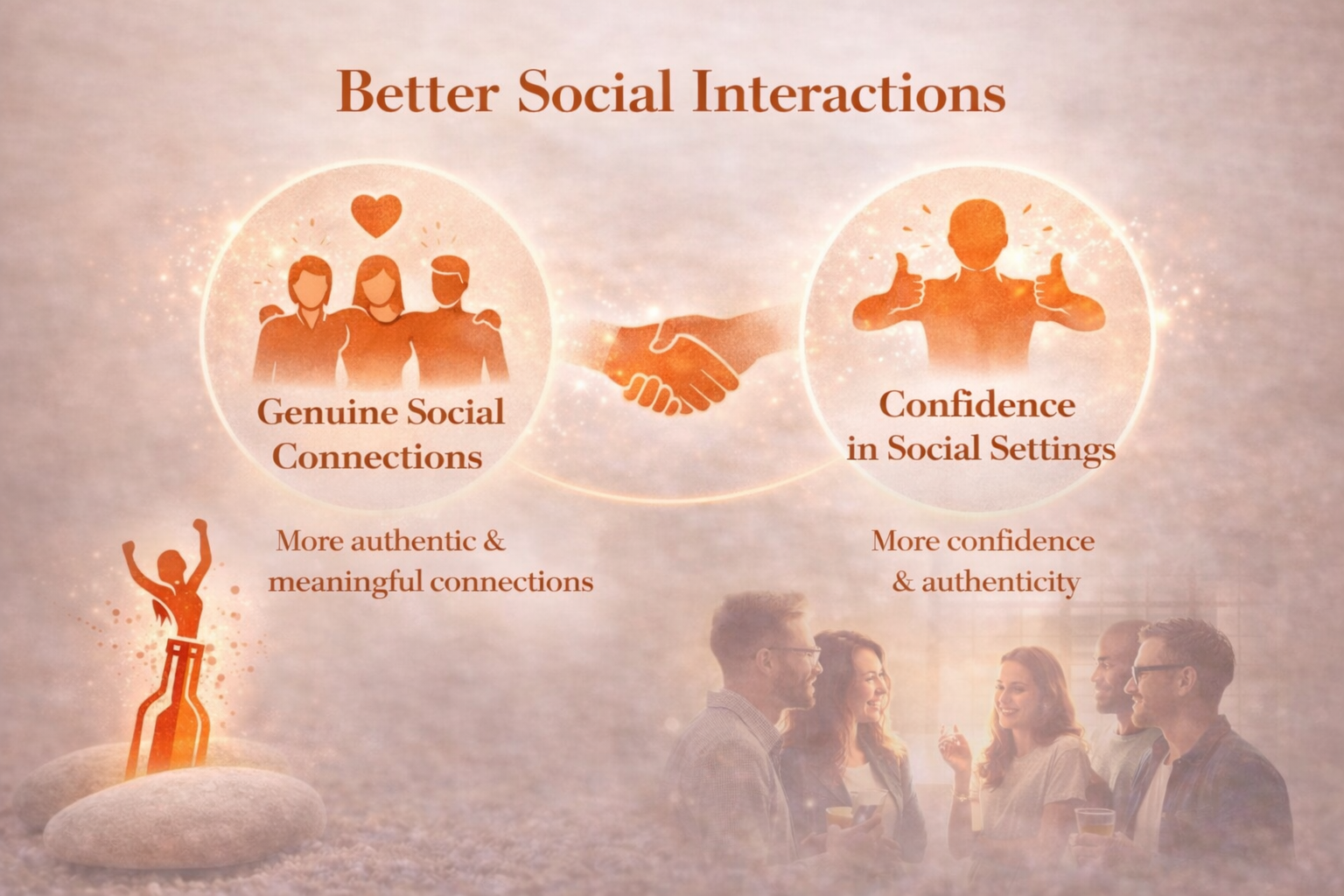
Better Social Interactions
Genuine Social Connections: Alcohol often creates an artificial sense of connection. In contrast – without alcohol you’ll find that your relationships become more genuine and authentic… meaningful! Leading to deeper, more conscious interactions with others.
Confidence in Social Settings: Initially, socializing without alcohol may feel uncomfortable… because it’s likely an unknown for much of your adult life! Alcohol does not make us more smart, sexy, funny… it’s all in us, we just find new ways to cultivate those attributes more authentically.
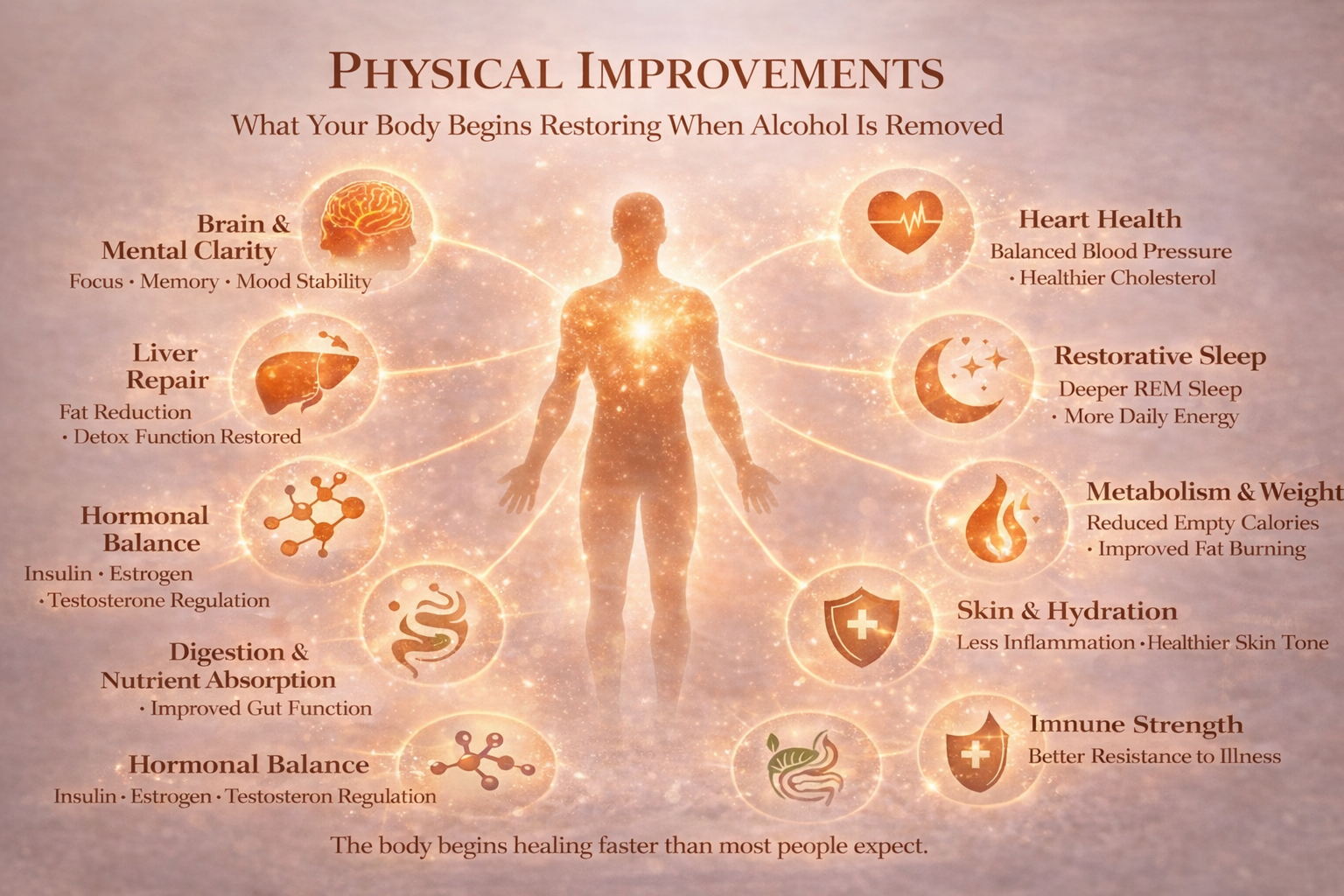
PHYSICAL IMPROVEMENTS
When you stop drinking your physical functions and overall health will improve, often relatively quickly. Oftentimes, these are “unseen” or unfelt, but important nonetheless.
Liver Function
Reduced Liver Fat: Within a few weeks, the liver starts shedding excess fat, improving its ability to process toxins.
Liver Repair: Stopping alcohol gives the liver a chance to repair itself. Chronic alcohol use can lead to conditions like fatty liver, hepatitis, or cirrhosis, but early-stage damage can be reversible.
Improved Heart Health
Blood Pressure Stabilization: Alcohol can raise blood pressure. Quitting alcohol often results in lower blood pressure and reduced risk of heart disease.
Lower Cholesterol: Alcohol contributes to higher triglyceride levels (a type of fat in the blood), so quitting helps normalize cholesterol levels.
Better Brain Function
Improved Cognitive Function: Alcohol can impair memory and concentration. Over time, quitting can improve focus, clarity, and cognitive function.
Better Mood Regulation: Alcohol can exacerbate anxiety and depression. Without it, many people experience improved emotional stability and better mood regulation.
Improved Sleep Quality
Deeper, Restorative Sleep: Alcohol interferes with REM sleep, the most restorative sleep phase. Quitting can result in better sleep quality, leading to more energy and alertness during the day.
Weight Loss and Metabolism
Calorie Reduction: Alcohol is calorie-dense, and quitting can lead to weight loss as you eliminate these “empty” calories.
Better Metabolism: Alcohol disrupts the body's metabolic processes. Without alcohol, your body burns fat more efficiently.
Better Skin Health
Improved Hydration: Alcohol is dehydrating, and quitting leads to better hydration, which can result in clearer, healthier skin.
Reduction in Inflammation: Alcohol can cause skin inflammation, contributing to conditions like acne and redness. Quitting alcohol helps reduce inflammation and improve skin tone.
Boosted Immune System
Stronger Immunity: Alcohol weakens the immune system, making you more susceptible to infections. After quitting, your immune system functions more effectively, reducing the likelihood of illness.
Improved Digestion
Better Nutrient Absorption: Alcohol can damage the lining of the stomach and intestines, hindering nutrient absorption. Quitting allows the digestive system to heal, improving digestion and nutrient uptake.
Hormonal Balance
Restored Hormonal Levels: Alcohol disrupts hormones like insulin, estrogen, and testosterone. Quitting allows for better regulation of these hormones, improving overall metabolic and reproductive health.
Mental Health
Improved Emotional Well-being: As alcohol is a depressant, stopping can help alleviate symptoms of anxiety and depression, improve mood stability, and reduce feelings of irritability or sadness.
Initially, you might face some new or slightly uncomfortable challenges (withdrawal from an addictive substance might have some unpleasant repercussions) – but we’ve got you! Reframinging and Replacement and Community and Inspirational Support ~ Your Journey Out of the Bottle will not be a solo trip!
-
Our downloads have everything you need to supplement this course.