
Add a video
HEALTH & NUEROSCIENCE
Alcohol consumption can have significant impacts on women's systems, affecting various bodily functions and health outcomes. Basically, as we have previously learned, alcohol pretty much touches (infests) every body function so it’s not surprising that the list below is vast.
Again, this is just a compilation of brief research found on the internet and placed together in one place for your reference.
Seek medical advice for further consultation on your health.
• Irregular Periods: Alcohol can disrupt the regularity of the menstrual cycle, leading to irregular periods.
• Ovulation Issues: It may impair ovulation, making it more difficult to conceive.
• Premenstrual Syndrome (PMS): Alcohol can exacerbate PMS symptoms such as mood swings, bloating, and breast tenderness.
• Increased Estrogen: Alcohol consumption can increase estrogen levels in women. Elevated estrogen levels are linked to a higher risk of breast cancer.
• Hormone Replacement Therapy: For women undergoing hormone replacement therapy (HRT), alcohol can amplify the effects of the treatment, potentially leading to side effects or health risks.
• Insulin Resistance: Alcohol can worsen insulin resistance, which is a common issue in women with PCOS, potentially exacerbating symptoms.
• Androgen Levels: Excessive drinking can increase androgen levels, leading to symptoms like hirsutism (excessive hair growth), acne, and weight gain.
• Thyroid Hormones: Alcohol can interfere with thyroid function, leading to an imbalance in thyroid hormones, which can affect metabolism, energy levels, and overall hormonal balance.
• Cortisol Production: Alcohol affects the adrenal glands and can alter cortisol production. Elevated cortisol levels can lead to stress, anxiety, and other health issues.
• Sleep Disruption: Alcohol can disrupt sleep patterns, which in turn can affect the body’s stress response and hormone regulation.
• Fetal Alcohol Spectrum Disorders (FASD): Drinking during pregnancy can lead to fetal alcohol spectrum disorders (FASD), which include conditions characterized by growth deficiencies, facial abnormalities, and central nervous system dysfunction.
• Hormonal Impact on Fetus: Alcohol can interfere with the development of the fetus, impacting hormonal balance and growth.
• Bone Density: Elevated estrogen levels due to alcohol consumption can initially increase bone density, but long-term heavy drinking can lead to bone loss and increased risk of fractures.
• Increased Risk: Higher estrogen levels from alcohol consumption are associated with an increased risk of breast cancer.
• Hormone Metabolism: The liver plays a crucial role in hormone metabolism. Alcohol-induced liver damage can impair the liver’s ability to metabolize hormones, leading to hormonal imbalances.
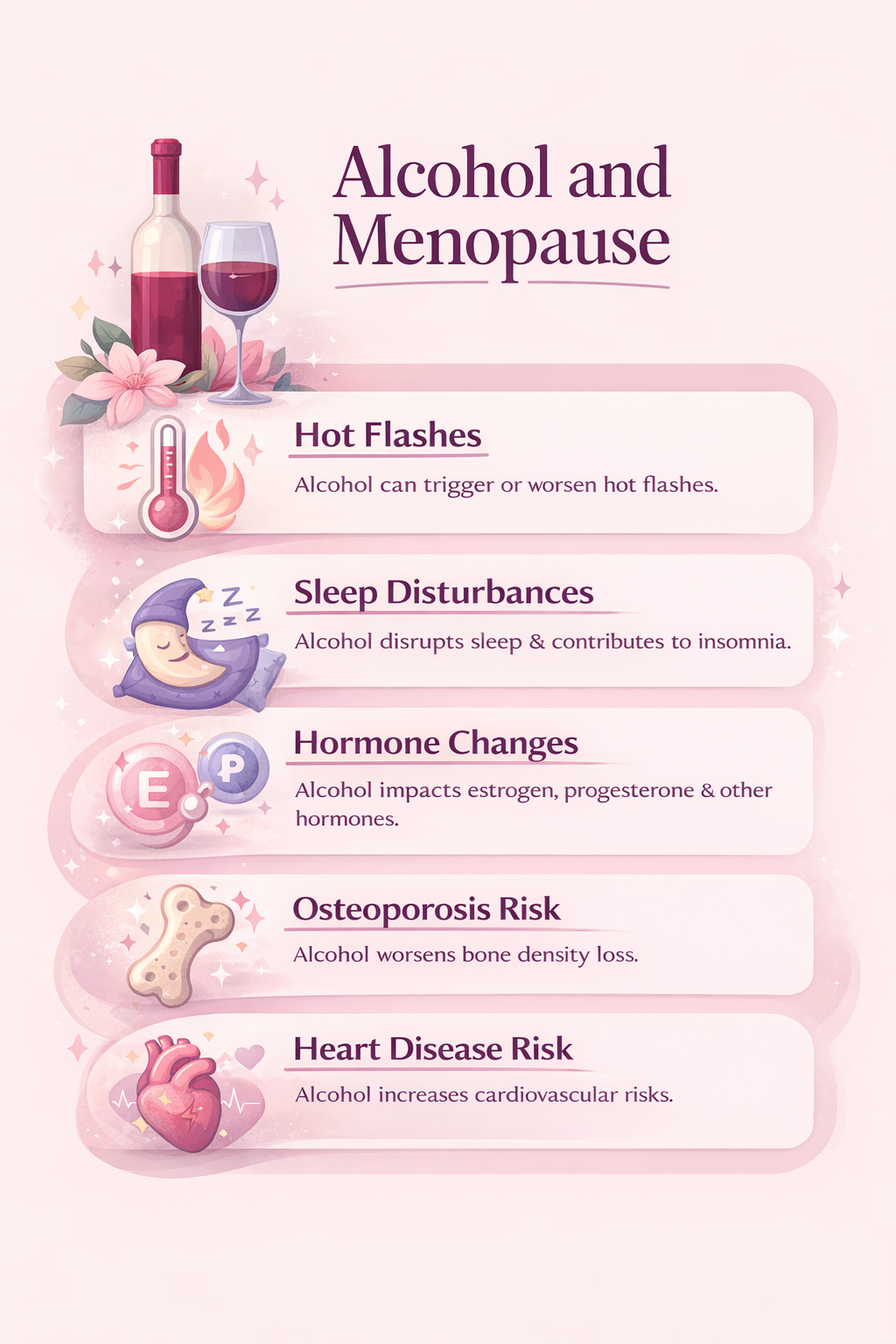
Alcohol can affect menopause in various ways, impacting both the symptoms and the overall health of women undergoing this transition.
• Hot Flashes: Alcohol can trigger or worsen hot flashes, which are a common symptom of menopause. This may be due to alcohol's effects on blood vessels and body temperature regulation.
• Sleep Disturbances: Alcohol consumption, particularly in the evening, can disrupt sleep patterns and exacerbate insomnia, a common issue during menopause.
• Estrogen Levels: Alcohol can influence estrogen levels in the body. While moderate alcohol consumption has been associated with higher estrogen levels, this can be a double-edged sword as higher estrogen can increase the risk of certain cancers, such as breast cancer.
• Progesterone and Androgens: Alcohol can also affect the levels of other hormones, such as progesterone and androgens, which can further impact menopausal symptoms.
• Osteoporosis Risk: Menopause already increases the risk of osteoporosis due to declining estrogen levels. Excessive alcohol consumption can further reduce bone density and increase the risk of fractures.
• Heart Disease: Moderate alcohol consumption might have some protective effects on heart health. However, excessive drinking can increase the risk of high blood pressure, cardiomyopathy, and other cardiovascular issues, which are particularly concerning as the risk of heart disease increases with menopause.
• Mood and Anxiety: Alcohol can have both short-term and long-term effects on mood. While it might provide temporary relief from stress or anxiety, regular alcohol use can lead to dependency and worsen anxiety or depression over time, which are already concerns during menopause.
• Weight Gain: Alcoholic beverages can be high in calories and contribute to weight gain, which is a common issue during menopause due to hormonal changes and a slower metabolism.
• Breast Cancer: There is evidence that alcohol consumption can increase the risk of breast cancer, which is a significant concern for menopausal women, particularly those with higher estrogen levels.
Women are underrepresented in clinical trials, and have been excluded from them in the past.
In 1977, the FDA banned women of childbearing age from most clinical trials, which led to a lack of data on how drugs affect women.
The ban was lifted in 1993, and the FDA now requires women to be included in research unless there's a justification for exclusion.
However, women still only make up about 41% of clinical trial participants, and are even less represented in early-phase trials.

Our downloads have everything you need to supplement this course.