
HEALTH & NUEROSCIENCE
The absurdity of alcohol and the unintended disabling effects. Side Effects!
Pointing Out the Elephant in the Room
Sometimes the most powerful thing we can do is simply point out what has been hiding in plain sight.
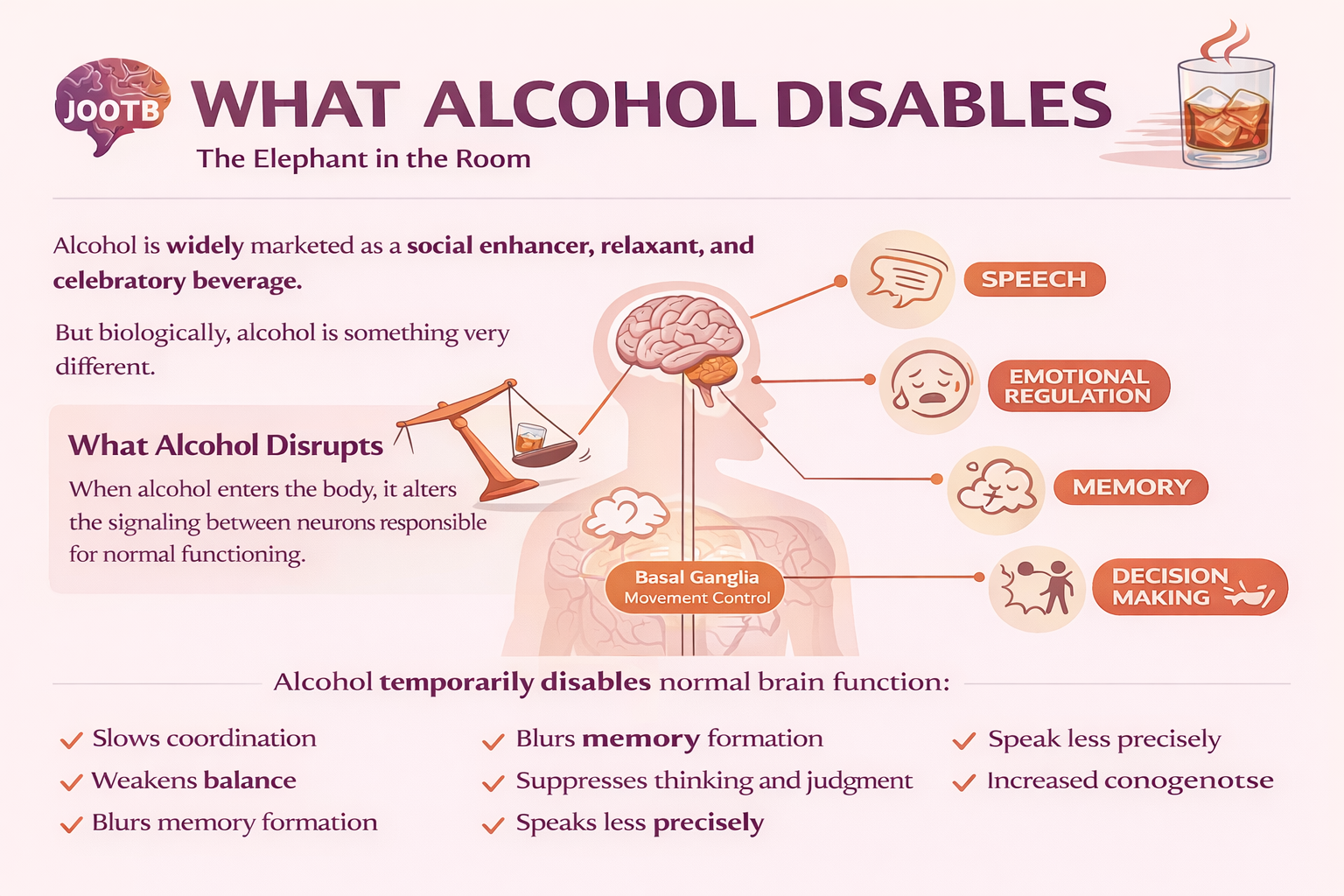
Alcohol is widely marketed as a social enhancer, a relaxant, a celebratory beverage — something sophisticated, normal, and even necessary for connection.
But biologically, alcohol is something very different.
Alcohol is a central nervous system depressant that interferes with how the brain and body communicate.
In simple terms:
Alcohol impairs the systems that allow us to function clearly and coherently.
When alcohol enters the body, it begins altering the signaling between neurons responsible for our basic functioning.
This directly affects:
• Coordination
• Balance
• Reaction Time
• Speech
• Memory
• Emotional Regulation
• Decision-Making
• Sensory Perception
As alcohol levels rise, humans literally become less capable of seeing clearly, thinking clearly, moving clearly, and communicating clearly.
We hear less accurately.
We speak less clearly.
We walk less steadily.
We think less rationally.
We remember less reliably.
And yet — astonishingly — this is all treated as normal.
THE CULTURAL CONTRADICTION
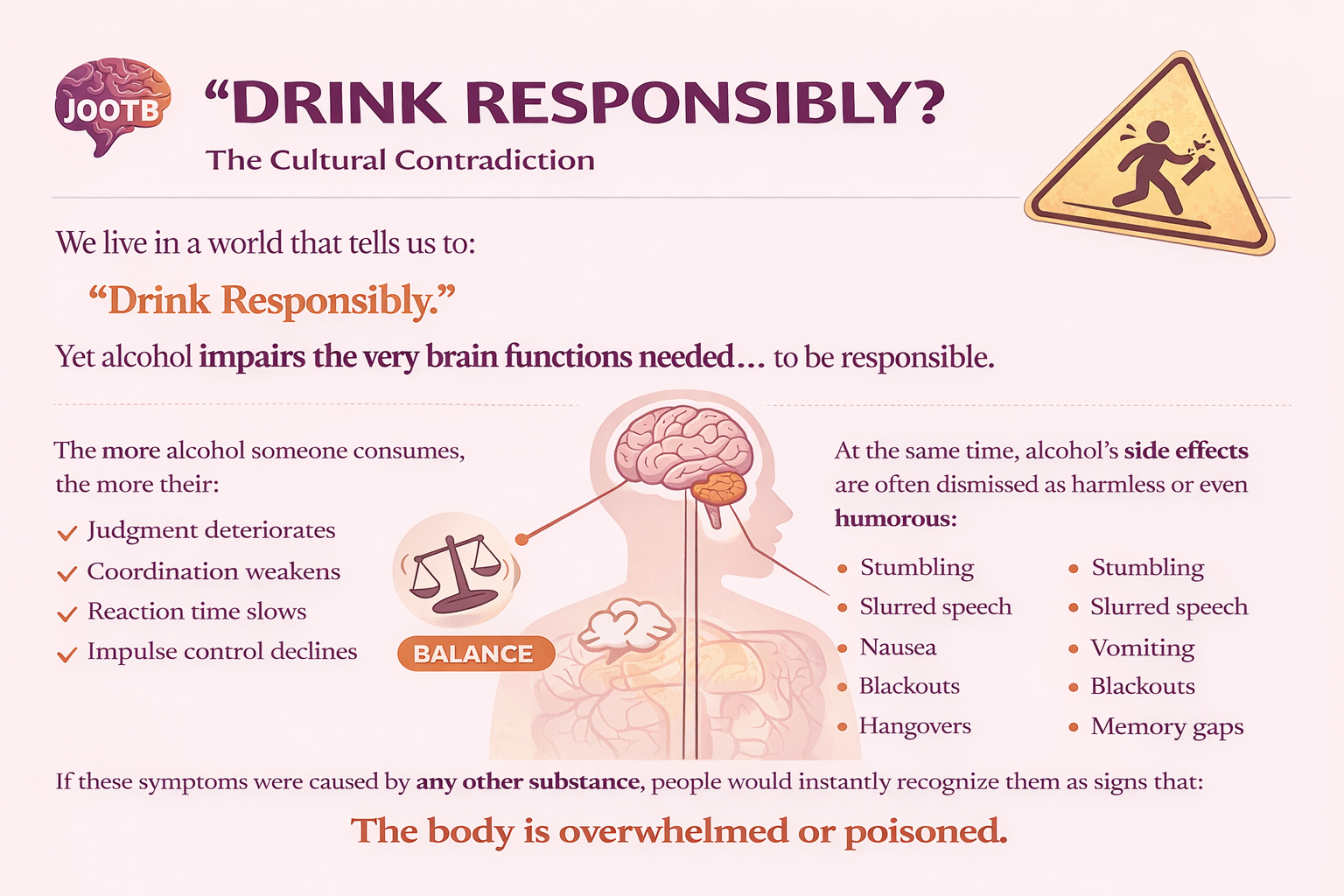
We live in a culture that tells people to:
“Drink Responsibly.”
But alcohol directly impairs the brain functions required for responsible behavior.
The more alcohol someone consumes, the more their:
• Judgment deteriorates
• Coordination weakens
• Reaction time slows
• Impulse control declines
At the same time, many of alcohol’s side effects are culturally dismissed as harmless or even humorous:
• Stumbling
• Slurred speech
• Nausea
• Vomiting
• Blackouts
• Hangovers
• Memory gaps
• Emotional volatility
If these symptoms occurred from any other substance, most people would immediately recognize them as signs that the body was being overwhelmed or poisoned.
Yet with alcohol, they are often treated as part of the experience.
TEMPORARY IMPAIRMENT — BY DESIGN
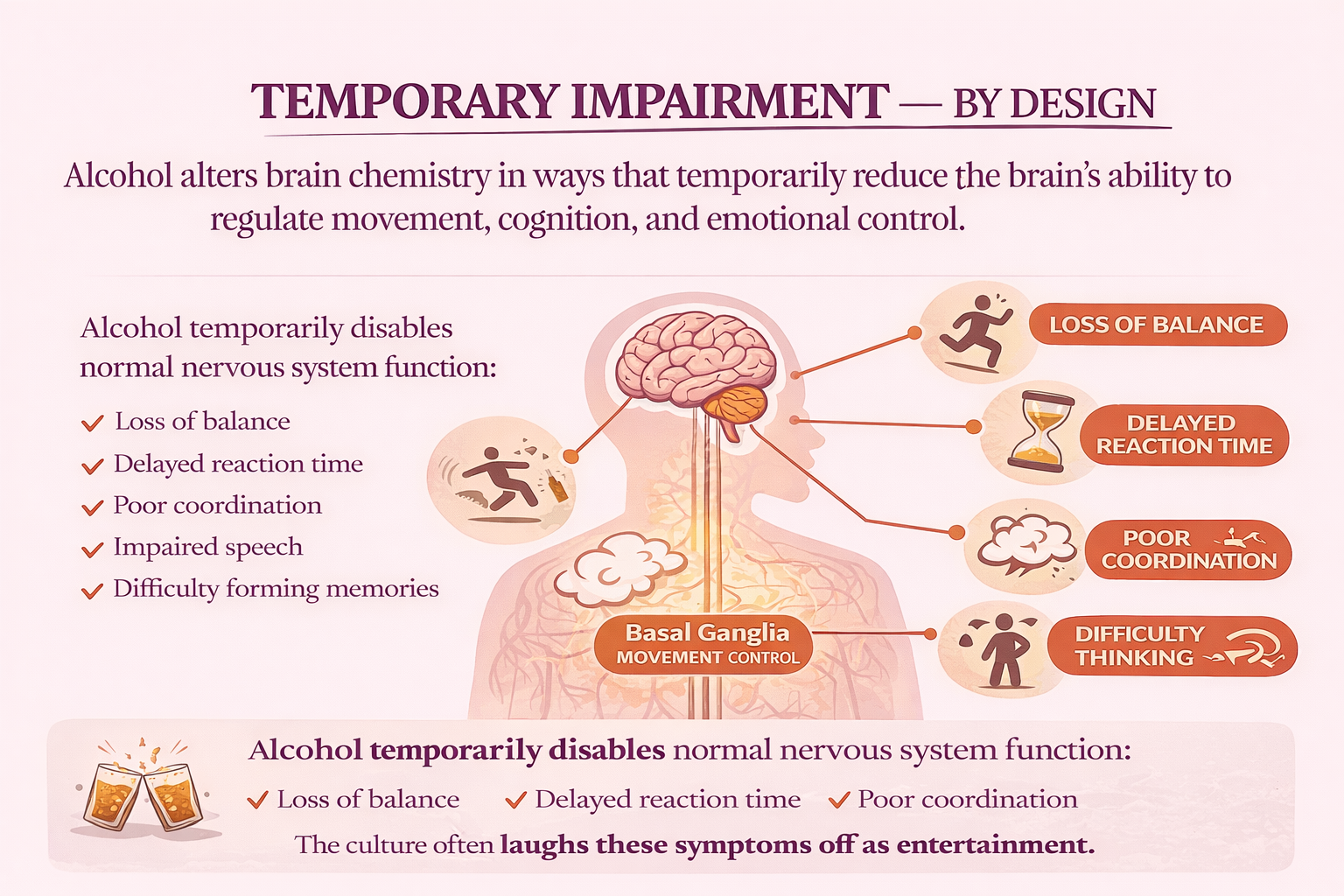
Alcohol alters brain chemistry in ways that temporarily reduce the brain’s ability to regulate movement, cognition, and emotional control.
This is why intoxication often produces symptoms that resemble neurological impairment:
• Loss of balance
• Delayed reaction time
• Poor coordination
• Impaired speech
• Slowed thinking
• Difficulty forming memories
In effect, alcohol creates a temporary neurological impairment in the nervous system.
Some people live with neurological or physical disabilities that affect coordination, speech, or cognition.
Alcohol artificially produces similar impairments in otherwise healthy nervous systems.
Yet when alcohol causes these effects, the culture often laughs them off as entertainment.
WHEN THE EFFECTS BECOME PERMANENT
While many of alcohol’s effects are temporary, repeated exposure can create long-term consequences for the brain and body.
Chronic alcohol use has been associated with damage to:
• The Liver
• The Cardiovascular System
• The Digestive System
• Hormonal Balance
• The Immune System
• The Nervous System
• Cognitive Function
In some cases, alcohol exposure can lead to permanent neurological injury or long-term cognitive decline.
These outcomes are rarely emphasized in the cultural narrative surrounding alcohol consumption.
SEEING THE ABSURDITY CLEARLY
History offers many examples where practices once framed as progress, normalcy, or harmless tradition were later revealed to carry serious consequences.
For example, When industries, such as chemical manufacturers and industrialization promote something as beneficial while the underlying reality reveals harm, society eventually has to confront the contradiction.
Alcohol culture often operates in this same space:
Something normalized.
Something marketed.
Something rarely examined honestly and with transparency
The goal of this lesson is not moral judgment.
The goal is clear awareness.
THE PURPOSE OF JOOTB
Journey Out of the Bottle exists to help people examine alcohol through a clearer lens:
Biological
Neurological
Cultural
Not through stigma.
Not through shame.
But through truth and education!!
Wake Up. Wise Up. Rise UP!
Because sometimes the first step toward change is simply recognizing the elephant
that has been standing in the room all along.
-
Our downloads have everything you need to supplement this course.